




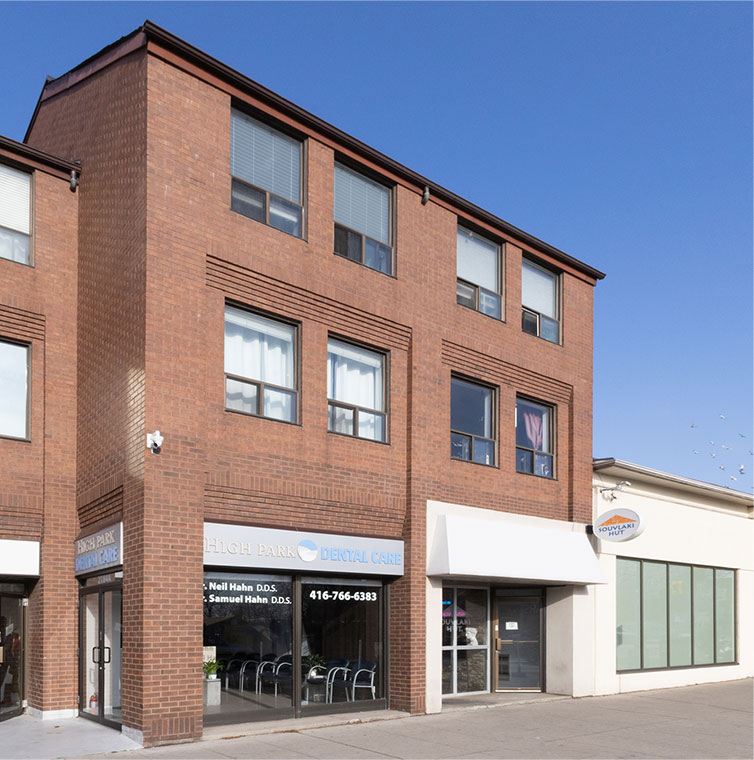
Many people believe Invisalign only works for minor tooth alignment issues. However, an experienced Invisalign dentist can treat complex orthodontic cases that were once only possible with traditional braces. At High Park Dental Care, located at 2184A Bloor Street West in Toronto, the Invisalign dentist team successfully treats severe crowding, bite problems, and jaw alignment issues using advanced clear aligner techniques.
Clear aligner technology has evolved significantly over the past decade. What started as a solution for simple cosmetic corrections now addresses challenging orthodontic problems. Understanding what an experienced Invisalign dentist can achieve helps patients explore all their treatment options before defaulting to metal braces.
Complex Cases Treated by Your Invisalign Dentist
Advanced Invisalign techniques allow treatment of orthodontic issues that previously required traditional braces. The Invisalign dentist evaluates each case individually to determine if clear aligners are appropriate.
Severe Crowding Correction
Severe crowding occurs when teeth don't have enough space in the jaw. This creates overlapping, twisted, or displaced teeth that affect both appearance and function.
An experienced Invisalign dentist can treat severe crowding through:
• Strategic tooth extraction when necessary
• Interproximal reduction (IPR) to create space
• Arch expansion to widen the dental arch
• Precise tooth movement sequencing
The treatment process involves careful planning to move teeth gradually into proper positions. The Invisalign dentist uses 3D imaging to map out each movement stage. This ensures teeth shift safely without damaging roots or surrounding bone.
Severe crowding cases typically take 18 to 24 months to complete. However, results are often comparable to traditional braces with the added benefit of removable, nearly invisible aligners.
Bite Correction and Malocclusion Treatment
Bite problems (malocclusions) affect how upper and lower teeth fit together. An experienced Invisalign dentist can correct various bite issues including:
Overbite Correction
An overbite occurs when upper front teeth significantly overlap lower teeth. Moderate to severe overbites can be corrected with Invisalign using:
• Precision cuts in aligners for elastic attachment
• Bite ramps that guide teeth into proper position
• Strategic attachment placement for controlled movement
The Invisalign dentist monitors bite changes throughout treatment to ensure proper alignment is achieved.
Underbite Treatment
Underbites happen when lower teeth protrude beyond upper teeth. While severe skeletal underbites may require surgery, many cases can be treated by an Invisalign dentist using:
• Class III elastics to shift the bite
• Upper arch expansion
• Controlled movement of front teeth
Treatment success depends on the severity and whether the issue is dental or skeletal in nature.
Crossbite Correction
Crossbites occur when some upper teeth sit inside lower teeth when biting. The Invisalign dentist treats crossbites through:
• Targeted expansion of the affected arch
• Individual tooth rotation and positioning
• Bite adjustment to prevent relapse
Open Bite and Deep Bite Solutions
Open Bite Treatment
An open bite leaves a gap between upper and lower teeth when the mouth is closed. The Invisalign dentist addresses this through:
• Intrusion of back teeth to close the bite
• Extrusion of front teeth when appropriate
• Habit correction (like tongue thrusting)
Deep Bite Correction
Deep bites occur when upper teeth cover too much of lower teeth. The Invisalign dentist corrects this by:
• Intruding upper front teeth
• Extruding back teeth to open the bite
• Using bite ramps for guided correction
Deep bite cases often respond well to Invisalign treatment with proper planning.
Advanced Techniques Used by Your Invisalign Dentist
Complex cases require specialized techniques beyond basic aligner therapy. The Invisalign dentist at High Park Dental Care uses various tools and methods to achieve optimal results.
Strategic Attachment Placement
Attachments are small tooth-colored bumps bonded to teeth. They give aligners better grip for specific movements. For complex cases, the Invisalign dentist uses optimized attachment designs including:
• Rectangular attachments for rotation
• Beveled attachments for extrusion
• Horizontal attachments for root movement
• Multi-plane attachments for complex movements
The Invisalign dentist strategically places attachments based on the treatment plan. Proper placement is critical for achieving desired tooth movements.
Attachment Timing and Removal
Not all attachments are needed throughout treatment. The Invisalign dentist may:
• Add attachments at specific treatment stages
• Remove attachments once certain movements are complete
• Replace attachments if they become worn or damaged
This staged approach optimizes treatment efficiency while minimizing visible attachments.
Auxiliary Appliances for Complex Cases
Some complex cases benefit from additional appliances used alongside Invisalign. The Invisalign dentist may recommend:
Elastics (Rubber Bands)
Elastics help correct bite relationships by applying force between upper and lower teeth. The Invisalign dentist prescribes elastics for:
• Overbite and underbite correction
• Midline alignment
• Class II and Class III bite relationships
Patients wear elastics as directed, typically 20 to 22 hours daily. Compliance with elastic wear significantly impacts treatment success.
Temporary Anchorage Devices (TADs)
TADs are small screws temporarily placed in the jaw bone. They provide fixed anchor points for tooth movement. The Invisalign dentist uses TADs for:
• Closing large gaps without moving anchor teeth
• Intruding teeth that are over-erupted
• Correcting severe bite problems
TADs are removed once they've served their purpose. The procedure is quick and healing is typically uneventful.
Palatal Expanders
For patients needing significant arch widening, the Invisalign dentist may use a palatal expander before or during aligner treatment. This appliance:
• Widens the upper jaw to create space
• Corrects crossbites
• Reduces the need for tooth extraction
Expansion is typically completed before beginning the main Invisalign treatment sequence.
Treatment Duration for Complex Cases
Understanding realistic timelines helps patients set appropriate expectations. The Invisalign dentist provides personalized estimates based on case complexity.
Factors Affecting Treatment Length
Several factors influence how long complex Invisalign treatment takes:
Severity of the Problem
More severe crowding, larger bite discrepancies, and multiple issues require longer treatment. Simple cases may take 6 to 12 months, while complex cases often need:
• 18 to 24 months for moderate complexity
• 24 to 36 months for severe cases
• Possible refinement phases for final adjustments
The Invisalign dentist provides timeline estimates during the consultation phase.
Patient Compliance
Wearing aligners 20 to 22 hours daily is essential for staying on schedule. The Invisalign dentist emphasizes that:
• Inconsistent wear extends treatment time
• Removing aligners too frequently slows progress
• Following instructions ensures predicted timelines
Biological Response
Individual biology affects how quickly teeth move. Some patients' teeth respond faster than others. The Invisalign dentist monitors progress and adjusts timelines as needed based on actual tooth movement.
Refinement Phases in Complex Treatment
Complex cases often require refinement phases to perfect results. The Invisalign dentist may order additional aligners to:
• Fine-tune tooth positions
• Perfect bite relationships
• Address any teeth that didn't track as predicted
Refinements are a normal part of complex treatment. They ensure the best possible final result rather than settling for "good enough."
Success Rates for Challenging Cases
Modern Invisalign technology achieves excellent results for complex orthodontic problems when treated by an experienced Invisalign dentist.
Predictability of Complex Movements
Research shows that Invisalign can predictably achieve:
• 90% accuracy for simple tipping movements
• 80% accuracy for rotation of rounded teeth
• 70% accuracy for root movement and extrusion
The Invisalign dentist accounts for these predictability rates when planning complex cases. Treatment plans may include overcorrection to compensate for less predictable movements.
Comparison to Traditional Braces
For many complex cases, Invisalign results now rival traditional braces. The Invisalign dentist can achieve comparable outcomes with benefits including:
• Better oral hygiene during treatment
• More comfortable tooth movement
• Fewer emergency appointments
• Nearly invisible appearance
However, some extremely complex cases may still require traditional braces or a combination approach.
Evaluating Your Case with an Invisalign Dentist
Determining if Invisalign can treat your complex case requires professional evaluation. At High Park Dental Care, the Invisalign dentist conducts thorough assessments including:
• Digital scans and 3D imaging
• Bite analysis and jaw relationship evaluation
• Review of dental and medical history
• Discussion of treatment goals and expectations
The Invisalign dentist provides honest recommendations about whether Invisalign is appropriate or if alternative treatments would be better. This transparency ensures patients receive the most effective treatment for their specific situation.
Complex orthodontic cases are no longer limited to traditional braces. An experienced Invisalign dentist can achieve remarkable results for severe crowding, bite problems, and alignment issues. Ready to explore if Invisalign can treat your complex case? Contact High Park Dental Care at (416) 766-6383 to schedule a comprehensive evaluation with an experienced Invisalign dentist today.








 FOLLOW US

| Monday | 9:00am to 5:00pm |
| Tuesday | 9:00am to 5:00pm |
| Wednesday | 9:00am to 5:00pm |
| Thursday | 9:00am to 5:00pm |
| Friday | 9:00am to 1:00pm |
| Saturday | CLOSED |
| Sunday | OPEN ALTERNATING WEEKS |